Hope For Gabriel
Support Association for Children with Bronchiolitis Obliterans
Overview and History
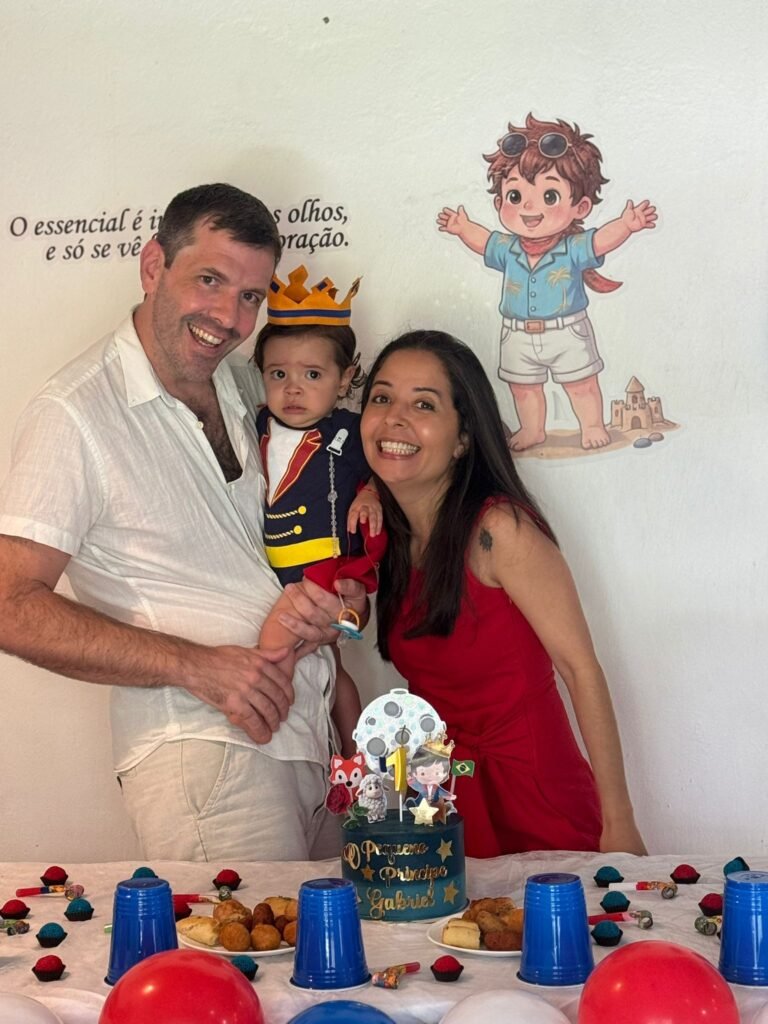
Hope for Gabriel is an association born from the story of our son, Gabriel.
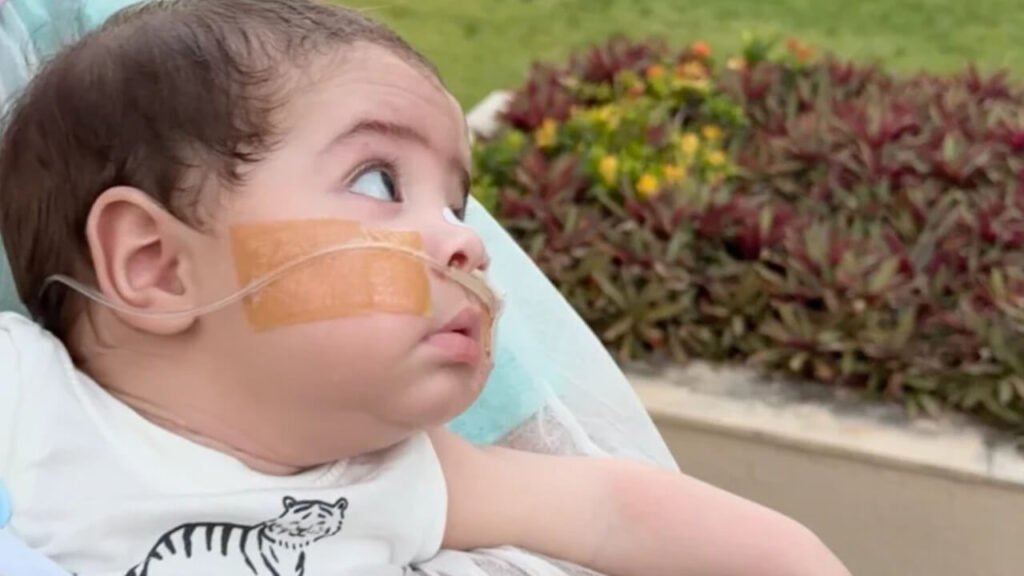
Born on April 6, 2025, in perfect health, Gabriel was hospitalized at 3 weeks old for bronchiolitis.
During his hospitalization in Brazil, he contracted several hospital-acquired infections and went through a major medical ordeal.
After 5 months in the hospital, he was discharged with a diagnosis of post-infectious bronchiolitis obliterans, a rare chronic disease that affects the small airways.
This association aims to inform, support affected families, and raise awareness about this still largely unknown disease.
This site allows sharing all of this. It is run by Johann, Gabriel’s dad.
Useful links
Blog
Hello, Gabriel’s Dad here!
On this site, I share his regular progress, our struggles, our victories, and ideas I’d like to pass on to him when he’s older.
These texts are my future letters to him, and for everyone accompanying us on this journey.
I call these the “Memoirs of a Hero’s Dad”:
Latest posts
Heure à Fortaleza (Brésil) : 05:44:05
Dernières modifications : 10/06/2026 17:50:54
10/06/2026
Hello, son,
I’m taking 30 minutes in the middle of the chaos that is life to write here.
It’s already been a few weeks since I last came by.
As they say in France, “no news is good news.”
I wouldn’t say it’s good news, but in any case the news about you is stable.
Let’s go over the usual points:
Nutrition
We’re continuing to make progress.
Last week you didn’t gain any weight and we ran into a few difficulties, but overall it’s much better than before.
You put a little weight back on last month, which keeps us from skimming that infamous malnutrition curve that we’d already fallen below.
The issue you have today is that you hate eating anything that isn’t a perfectly smooth purée or applesauce. If there’s even the tiniest lump in it, you don’t want it.
That’s because you spent 6 months with a feeding tube and all the sensitivity in your mouth is out of whack. We’re working on it, with some slightly strange massages around your mouth.
I think we just need to be patient and we’ll get through this part. I’m pretty confident.
Respiratory
For the past few weeks, you’ve finally been accepting your NIV while you’re awake.
That changes everything, because we’re now aiming for a target of 6 hours per 24-hour period.
Usually it’s 2 hours in the morning, 2 hours in the afternoon, and 2 hours when you go to bed.
On the other hand, if you fall asleep with it and wake up with it, you scream and you hate it.
But what’s certain is that this NIV does you a world of good, and you’re MUCH MUCH less tired in the evening. Your retractions are less pronounced, you hardly wheeze. And so, indirectly, you use less energy, which probably makes it easier for you to gain weight.
I like to believe—and I hope—that if we do a lot of NIV during your first years, all the areas of your lungs that have collapsed will gradually reopen. And that later, when you’re older, you won’t need it anymore. That’s why we insist, even when you scream. One day you’ll understand that those hours with the mask were an investment.
Your latest tests show that you’re a bit low on IgG, the immune system’s “veteran soldiers”: the ones that patrol the blood and protect the lungs from bacteria. When there isn’t enough, the body has a harder time fighting off respiratory infections, which is a problem with already fragile lungs. We’re going to keep a close eye on that.
We’re still waiting to see whether pulse therapy will happen, but it will most likely be this summer.
Geek vs. the healthcare world
Son, I’m a geek.
When I have a problem to solve with tech, I build solutions.
And I’m tired of always having to give every document to every doctor. So I built an app, BIBI, that connects directly to your pulse oximeter and indexes all the data. I can easily send healthcare professionals a link with all your blood test results, vaccines, and weight charts.
At the same time, we’re still fighting with the insurance companies.
Honestly, with my working hours—which are already limited—I must spend about 60% of my time dealing with projects/meetings/emails/messages because of what the insurance won’t reimburse (despite court rulings in our favor). It might still be manageable if that insurance didn’t cost us a fortune for nothing. The worst part is having one of their employees as a direct contact and seeing how much they don’t give a damn about leaving people in deep trouble. I’d be ashamed in their place. I deeply hate those people, and I didn’t think it was possible, but this whole journey has shown me what it is to feel hatred.
I make up for it by building systems that automate as much of this hell as possible, so that in the long run I spend as little time on it as I can.
“Normal” life
A few months ago, I was telling you that I’d like to have a normal life.
I’ve understood that this will never happen, but I’m trying to find joy in the life we do have.
Because it could be much worse too, considering what we’ve been through.
I’m glad to be self-employed and to be able to manage my time however I want, without having to manage employees.
It gives me the flexibility to see you and spend time with you whenever I want and whenever it’s needed.
And I don’t know what it’ll be like when you’re 20 and reading all this. But in our time, having an online business is real freedom, and I’m glad I oriented my whole life around it—I can see you more often working from home!
Every day, I’m there when you wake up, and when you go to bed.
You give me kisses, you laugh every time I ask you if you’re the most handsome.
We also go to the beach every Sunday with your mom.
I have to admit that at first it was quite a challenge—the stress about the virus, etc.—but we avoid crowds, we stay in our bubble, and we’re getting more and more relaxed. This Sunday, you sat in the water and got your first wave. You were so cute discovering all of that.
High season is about to start here, and the rain and all its humidity will stop. I’m hopeful we can be a bit more relaxed about viruses until December.
We also almost cut your hair. We have to admit it’s long, but you’re so cute like that.
End of this blog?
I’m thinking about maybe stopping writing to you here and writing to you in a more private journal.
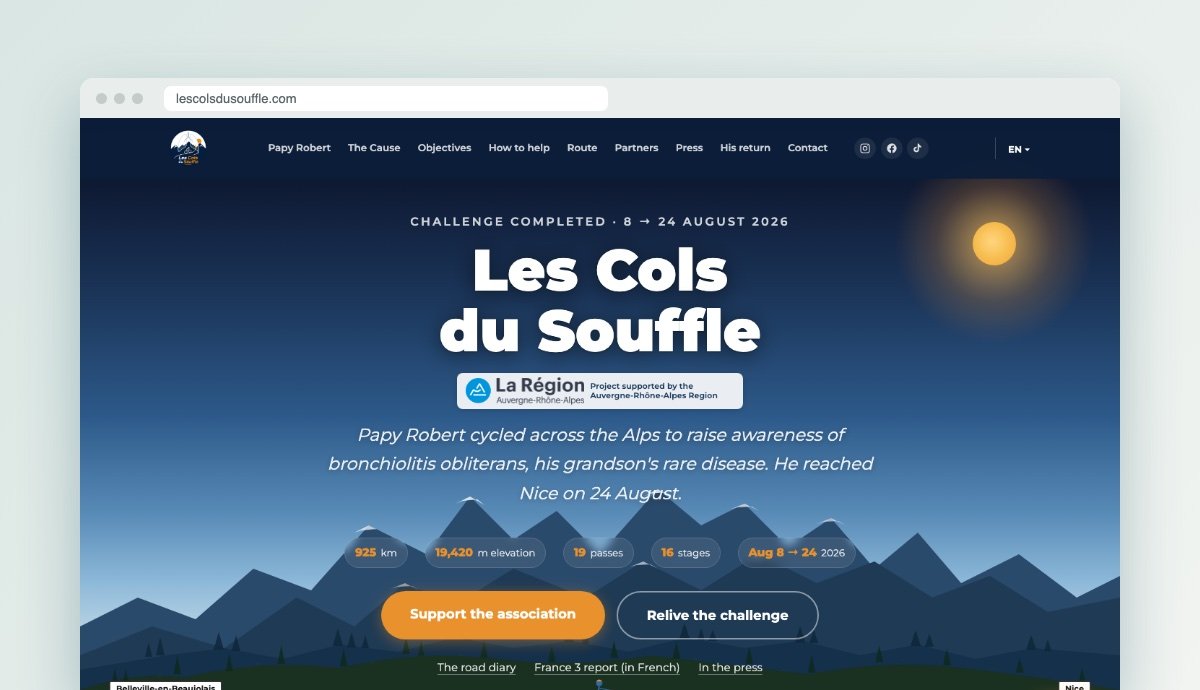
Right now we’re sharing for Grandpa’s challenge, Les Cols du Souffle, and I have to admit I really don’t like putting our family on display.
I tell myself it’s a necessary evil, and it’s true that it brings us interesting contacts around the disease and it also raises awareness.
I don’t know what the future holds. We learned last week that a 6-year-old child with the same disease as you died in Spain. I don’t have all the details, but I have to say what we hear is more often negative than positive. And I like to believe it’s simply because the people who make it through never want to hear about it again.
Illness is the topic everyone wants to avoid. Because it points to death, and nobody likes death.
Over time I’m discovering that, actually, if you want to raise awareness, you have to make people laugh and have a huge amount of empathy. I think that’s why I love dark humor. And self-deprecation. If you can laugh about illness, then you make others laugh and you earn respect. Like your great-grandmother used to tell me when I was little: “better to make people envy you than pity you.” I think about all of this a lot because I’d like to grow our association, or create a new one, to make your disease known and be on the front line to find solutions. But how do you communicate effectively to help as many people as possible? There’s prevention, challenges like your grandpa’s, but we also need to be innovative.
You’ll see, son: in life, you have to bring value to people if you want to receive some in return. It’s sometimes unfair in serious situations, especially when it’s not your fault. But it’s human.
So let me give you what I think I’ve understood, hoping it will be useful to you.
People run from illness. Not because they’re mean, but because it reminds them that they too will die one day. It’s a reflex, not a choice. Don’t hold it against them too much.
If you inspire pity, people look down on you. If you make them laugh, they sit down next to you.
That’s the whole difference.
When you’re the first to laugh at your problems, you give others permission to breathe. And then they stay.
My great-great-grandmother used to tell me in her own words, when your dad liked to snack a little too much on cheese and cured sausage: “better to make people envy you than pity you.”
And then there’s one last thing.
You, today, don’t produce anything. You don’t bring in anything.
And yet you are what has the most value in my life.
So when you meet someone at rock bottom, remember that a person’s value isn’t always visible in the moment.
You’ll know that better than anyone.
I love you, my little potato.
Dad
21/05/2026
Hello, son,
A quick update.
Let’s start with the classic: food.
I think this time we’ve really figured out how you work, and we’re getting better and better at helping you gain weight. In any case, over the past few weeks you’ve been growing steadily. You were 8.37 kg this Monday, and I even think you’ve gained more since then. We’ll see next Monday.
Your appetite is back, you have less reflux, and feeding you has become a pleasure again. Before, it was a real ordeal. Today, it’s a nice moment again. I think you accept it better because you’re happy and relaxed, and so we finally feel like we’re back on track.
With hindsight, when we think about everything that happened, it’s actually pretty simple to understand.
You needed to eat very high-calorie meals to gain weight. And we couldn’t manage to give them to you properly anymore because we were exhausted, stressed, sometimes sad too, because life isn’t easy every day. So we ended up delegating a lot of meals to your nanny.
She did what she could, truly. But she had to force you more and more, make noise, distract you, move around, play games, just to get the spoon into your mouth. And little by little, you ended up completely put off.
So we had to accept going all the way back to square one.
Accept that you might lose a little weight temporarily. Accept starting again gently. And above all, put pleasure back before calories.
The consultant who’s been helping us from France also gave us lots of simple but really useful tips. For example, your chair is suspended and your feet weren’t resting on the floor. She explained that for some children, having stable support with their feet can help a lot during meals. So we rigged up a system so you can rest your feet properly.
Lots of little details like that which, put together, change everyday life.
And listen… for now, it seems to be working.
Second point, the most important: breathing and lungs.
I think we’re hitting a kind of glass ceiling.
Today, you don’t need oxygen all the time anymore, but we can see you’re struggling. You’re making more and more effort, you’re crawling fast, you’re starting to want to stand up, to explore more… but as soon as you get into these activities, you get very out of breath.
In those cases, your breathing wheezes like you have asthma. You have strong retractions. Your belly moves in and out in an impressive way, like a baby with a bad case of bronchiolitis… except for you, it’s almost constant.
And I have to admit that for us, your parents, it’s extremely hard to live with.
It’s been a year already that we’ve been fighting this, and sometimes we wonder if it will be like this your whole life. It’s a horrible thought. There are moments when we simply think, “Why?”
And me, with my rational brain, I question everything sometimes. I look for causes everywhere. I wonder what choices I made. Sometimes I even go way too far in my thoughts and tell myself that if I hadn’t been born, then you wouldn’t have been either, and you wouldn’t have to live through this.
And I’m not speaking for your mom, but I think she works the same way. Truthfully, we don’t talk much about these darker sides of our thoughts.
But the truth is, life is constant chaos. And sometimes, there’s no logical answer…
It’s easy to say you have to accept uncertainty when it’s about business, money, or projects. But when it affects your child’s health, it’s a whole different story. Because it feels deeply unfair.
Despite everything, we keep moving forward.
We’re also trying to understand why, on some days, you seem to breathe less well.
Your mom has worked a lot on this lately. She talked with physios, attended conferences, read a lot of things. And today, what we understand better is that atelectasis isn’t treated only with physiotherapy.
Physio helps, yes. But to reopen the areas of the lungs that close up, you often need what’s called positive pressure—that is, sending pressurized air into the lungs to try to reopen them.
Then physio, breathing exercises, and certain tools help keep those areas open over time. But to open them up, unfortunately there aren’t a thousand options.
So we’re focusing more on that.
We recently bought a high-flow machine, mainly to help move air around and keep the lungs cleaner. And above all, we’re now trying to be more consistent with the NIV.
And actually… big win: for the first time, we managed to put the NIV on you during the day while you were awake.
It might seem trivial to some people, but for us it’s huge.
Until now, your mom had to put the mask on you while you were asleep, by hand, quietly. You often woke up, you cried, and we ended up taking it off.
I think that, in fact, you learned that if you cried, the mask would go away.
So this time, we held firm for a few minutes despite the crying. And after a while… you accepted it. You got used to it.
So we’re going to keep going in this direction. Always with the same philosophy: trying to bring pleasure, calm, and trust back into something difficult.
Because if you accept the NIV better, then we may be able to help your lungs more and give you every possible chance to recover as much as possible.
At the same time, we also noticed something strange with your saturation during the night.
We use the Owlet sock to monitor your oxygen. Sometimes it showed drops below 90%, but when we looked at the summary in the morning, that data never appeared.
So of course… your geek dad started digging.
With my AI tools, I ended up recoding an app that pulls the sock’s real data directly. And then we realized that you do indeed sometimes have desaturations during the night.
Now we can pull a lot of precise stats. We’re trying to cross-reference everything: saturations, sleep periods, symptoms, physio sessions, NIV, meals, rough nights…
The goal is to turn all of this into real, smart medical tracking with reliable daily stats that we can share with the doctors.
And on top of that, also use AI to try to detect links or patterns we wouldn’t necessarily see with the naked eye.
And alongside all of that, you’re still an incredible child.
I love it because now I can ask you for kisses and you come over all happy with your little mouth and give me huge slobbery kisses, then you laugh.
We’re starting to have more and more interactions, and you’re beginning to understand and communicate more.
These wonderful little moments erase this ever-present illness.
To finish, we’re also going to talk about your grandpa’s project.
His sports challenge around your illness is moving forward more and more. The website has been updated, the Instagram and Facebook social media accounts have been created, and the project is slowly taking shape.
The site is:
If anyone wants to go take a look or support the project, please do.
We’re also looking for partners and companies that would like to join the adventure. We already have a few major groups who have joined us.
All the information is available on the website.
That’s it, my son.
That’s all for today.
I love you, my little potato.
And you’re even more of a little potato now that you’re gaining weight!
Dad
Join the support tribe for Gabriel
- Stay informed about the association's important events
- Receive important updates on Gabriel
- Support our family long-term